


News
Textile Mold & Antibacterial Protection Solutions
Protect fabrics, garments, home textiles, and industrial textiles from mold, bacteria, excess moisture, and humidity-related damage throughout production, storage, packaging, and transportation.
Admire provides application-based textile protection solutions covering anti-mold and antibacterial treatment, finished-product protection, and moisture control. Additional water-repellent treatments are available for textiles that require enhanced functional performance.
Our recommendations are based on the textile material, production process, packaging method, storage conditions, and transportation environment.
Effective Textile Mold Prevention Starts with Moisture Management
Mold problems in the textile industry rarely come from a single stage of the supply chain.
Dyeing, printing, washing, coating, and finishing processes may leave residual moisture in fabrics. Fabric rolls and semi-finished materials may then be stored in high-humidity warehouses. After garments and home textiles are packaged, temperature changes during long-distance transportation can create condensation and increase the risk of mold growth.
For this reason, effective textile mold prevention requires more than simply applying an anti-mold agent.
A complete approach considers the entire process:
Fiber & Fabric → Wet Processing → Finishing → Storage → Garment Manufacturing → Packaging → Transportation
Different stages present different risks, from residual moisture and microbial growth to high humidity, condensation, and container rain during ocean shipping.
The right solution combines microbial protection with moisture management according to the actual application.
Where Does Mold Risk Come From in Textile Production?
Moisture Absorption in Natural Fibers
Natural fibers such as cotton, linen, wool, and silk can absorb moisture from the surrounding environment.
When textiles remain in high-humidity or poorly ventilated conditions for extended periods, moisture accumulation can increase the risk of mold and bacterial growth.
Residual sizing agents, dyes, finishing chemicals, and other substances on textile surfaces may also influence the conditions for microbial growth.
Residual Moisture After Wet Processing
Dyeing, printing, washing, coating, and finishing processes may involve water or other liquid treatments.
If fabrics are not sufficiently dried after processing, residual moisture may remain within the fibers or fabric structure. This can be particularly important for thick materials and tightly wound fabric rolls.
Proper drying, humidity management, and appropriate anti-mold treatment can help reduce the risk of mold growth during subsequent storage and transportation.
Mold Risk Inside Fabric Rolls
Fabric rolls may remain in warehouses for extended periods before cutting or further processing.
Because air circulation is limited inside tightly wound rolls, the inner layers can be difficult to inspect. If moisture levels are elevated and warehouse humidity remains high, mold may develop in areas that are not immediately visible.
Controlling moisture and applying suitable mold protection at the appropriate production stage can help reduce this risk.
Moisture and Condensation During Packaging and Ocean Shipping
Finished garments, bedding, curtains, and other textile products are commonly packed in plastic bags, cartons, pallets, or other enclosed packaging.
Once sealed, moisture inside the packaging may have limited opportunities to escape.
During long-distance transportation, changes in temperature can cause water vapor to condense inside packaging or shipping containers. In ocean transportation, this may contribute to container rain, creating additional moisture and mold risks for textile cargo.
For export textiles, mold protection and moisture control should therefore be considered together.
Our Textile Mold Protection System
Instead of applying every product to every textile application, Admire selects protection according to the specific risk and stage of the supply chain.
Our core textile protection system focuses on three key stages:
Production
Anti-Mold & Antibacterial Treatment
2. Finished Products
Surface Mold & Antibacterial Protection
3. Packaging & Transportation
Moisture Control and Mold Protection
This approach allows textile manufacturers and exporters to choose the protection they actually need.
1. Anti-Mold & Antibacterial Treatment During Textile Production
For textile manufacturers, antimicrobial treatment can be incorporated into an appropriate production or finishing stage depending on the material and process requirements.
ADM-BJ01 Antibacterial & Anti-Mold Agent
ADM-BJ01 is one of our core solutions for textile production-stage mold and antibacterial protection.
It is designed for suitable natural and synthetic textile materials and can be incorporated into appropriate production or finishing processes.
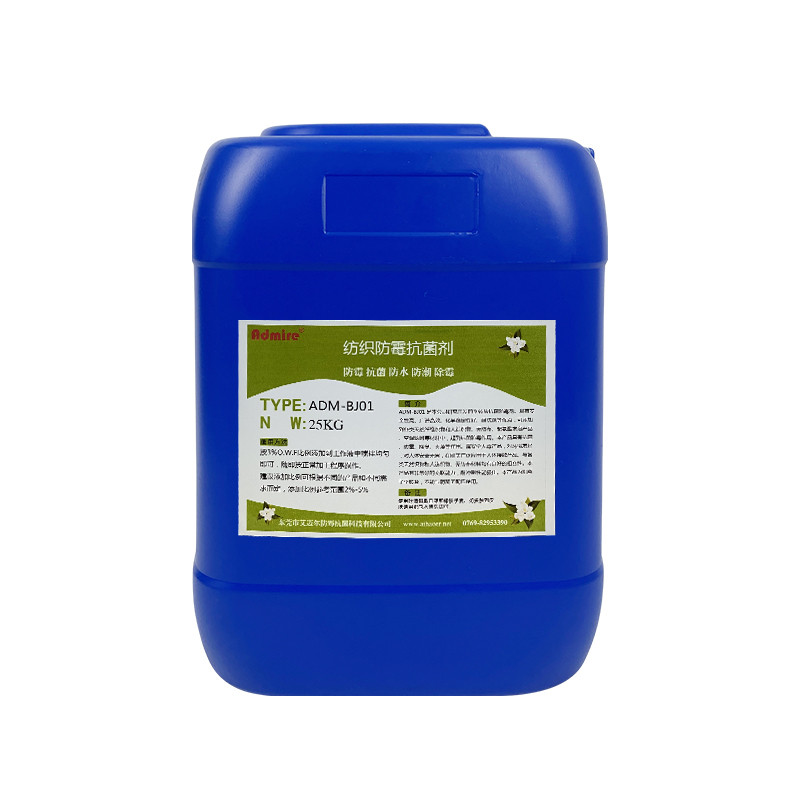
Key Features
Broad-spectrum antibacterial and anti-mold protection
Quaternary ammonium-based antimicrobial system
Suitable for selected natural and synthetic fibers
Can be incorporated into appropriate production or finishing processes
Water-based formulation
Helps reduce the risk of microbial growth on treated textile surfaces
Typical Applications
Cotton and blended fabrics
Knitted fabrics
Woven fabrics
Garment fabrics
Home textile materials
Nonwoven materials
The appropriate dosage and application process should be determined through testing based on the fiber composition, fabric structure, production process, and required performance.
2. Mold Protection for Finished Garments & Textile Products
Not every textile product is treated during fabric manufacturing.
For finished garments, home textiles, and other textile products, surface treatment can provide a convenient option for targeted mold and antibacterial protection.
ADM-CF Anti-Mold & Antibacterial Agent
ADM-CF is one of our core solutions for finished textile and garment protection.
It is a water-based antimicrobial formulation designed for suitable surface treatment applications.
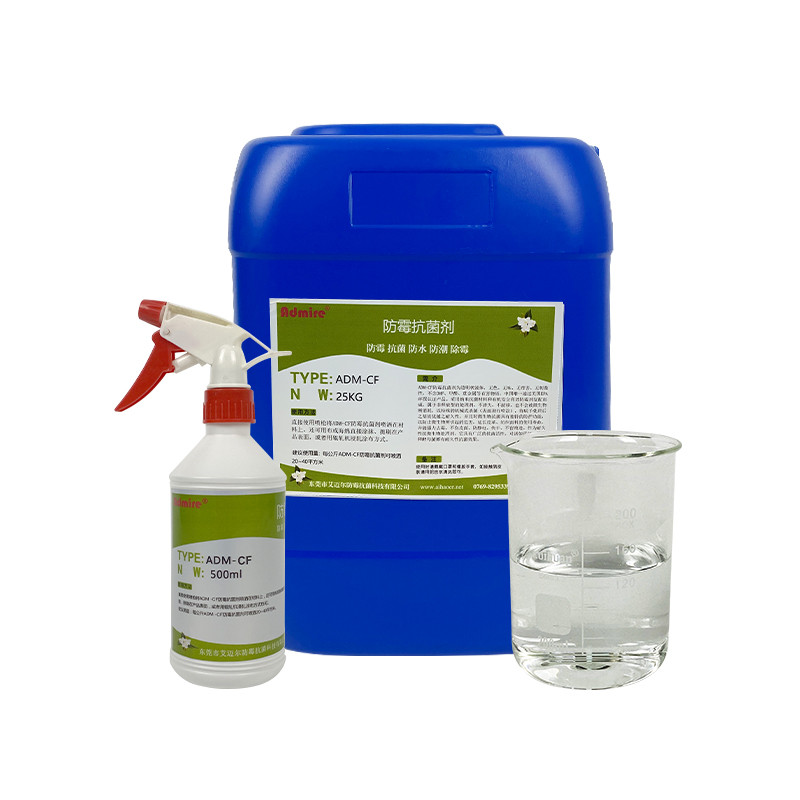
Key Features
Water-based composite antimicrobial formulation
Provides protection against common mold and fungal growth
Long-lasting protection through controlled-release technology
Does not contain DMF, formaldehyde, or heavy metals
Fast drying
Non-leaching treatment system
Helps reduce the risk of mold regrowth on treated surfaces
Typical Applications
Finished garments and apparel
Sportswear and outdoor clothing
Bedding
Blankets
Curtains
Upholstery fabrics
Carpets
Textile accessories
Sponge and foam products
For colored, coated, or specially finished textiles, compatibility testing is recommended before large-scale application to confirm that the treatment does not adversely affect color, hand feel, appearance, or other required properties.
3. Moisture Control for Textile Packaging, Storage & Ocean Shipping
Anti-mold treatment does not replace moisture control.
Even when textiles have received antimicrobial protection, excess moisture inside sealed packaging, warehouses, or shipping containers can create additional risks.
For export textiles, especially during long-distance ocean shipping, controlling moisture inside enclosed packaging can be an important part of mold prevention.
F-3 Anti-Mold & Moisture Absorbing Bag
F-3 is our core moisture-control solution for textile packaging, storage, and transportation.
F-3 is designed to absorb excess moisture inside enclosed packaging while also providing mold protection.
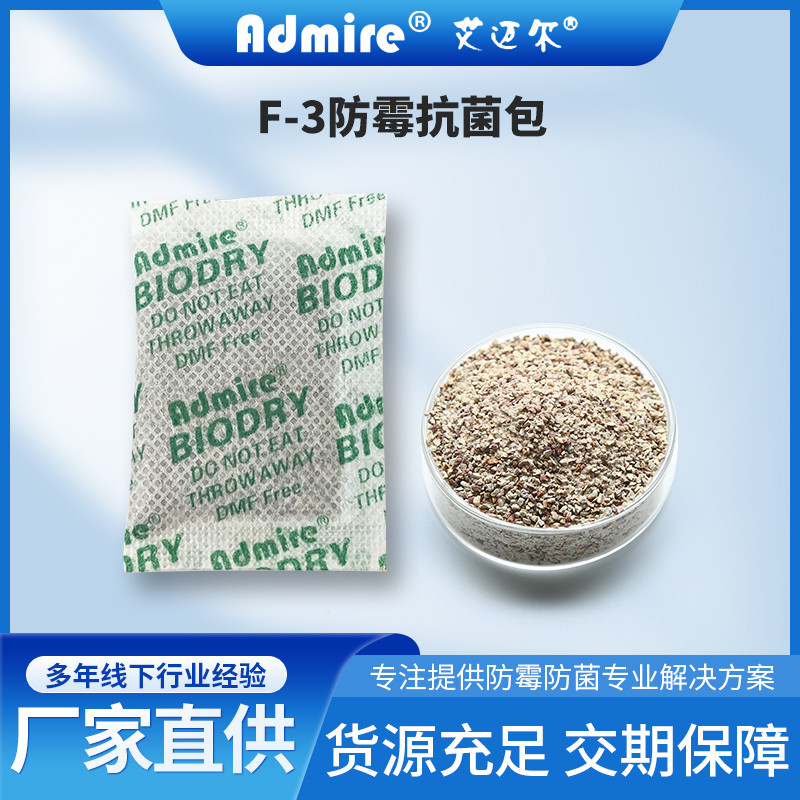
Key Features
Moisture absorption of up to 300% of its own weight at 25°C and 100% RH
Absorbs excess moisture in enclosed environments
Releases anti-mold protection during moisture absorption
Available in an odorless version
Higher moisture absorption capacity than conventional silica gel desiccants
Typical protection period of approximately 30–90 days, depending on packaging conditions, humidity, cargo type, and transportation duration
Made from natural plant-based fiber materials
100% biodegradable
Neutral pH
Non-corrosive to metals
High-absorption cotton-paper packaging
Good puncture resistance, anti-backflow performance, and antistatic properties
Typical Applications
Individual product packaging
Cartons
Shoe boxes
Bagged products
Enclosed packaging
Warehouse storage
Long-distance transportation
Export textile packaging
For ocean shipping, the required quantity of F-3 should be determined according to packaging volume, cargo type, moisture content, transportation duration, humidity conditions, and container conditions.
For moisture-sensitive textile cargo, F-3 can be combined with an appropriate anti-mold treatment when both moisture and microbial risks need to be addressed.
Additional Textile Protection Options
The three solutions above form the core of our textile mold and moisture protection system.
For applications requiring specific antibacterial or functional water-repellent performance, additional products can be considered.
ADM-Ag120 Silver Ion Antibacterial Agent
ADM-Ag120 is a clear, colorless liquid designed for suitable textile antibacterial applications.
It can be applied through methods such as spraying or padding, depending on the textile material and production process.
Silver-ion antimicrobial technology can be considered for applications requiring enhanced antibacterial protection.
The appropriate dosage, application method, and processing conditions should be determined through testing.
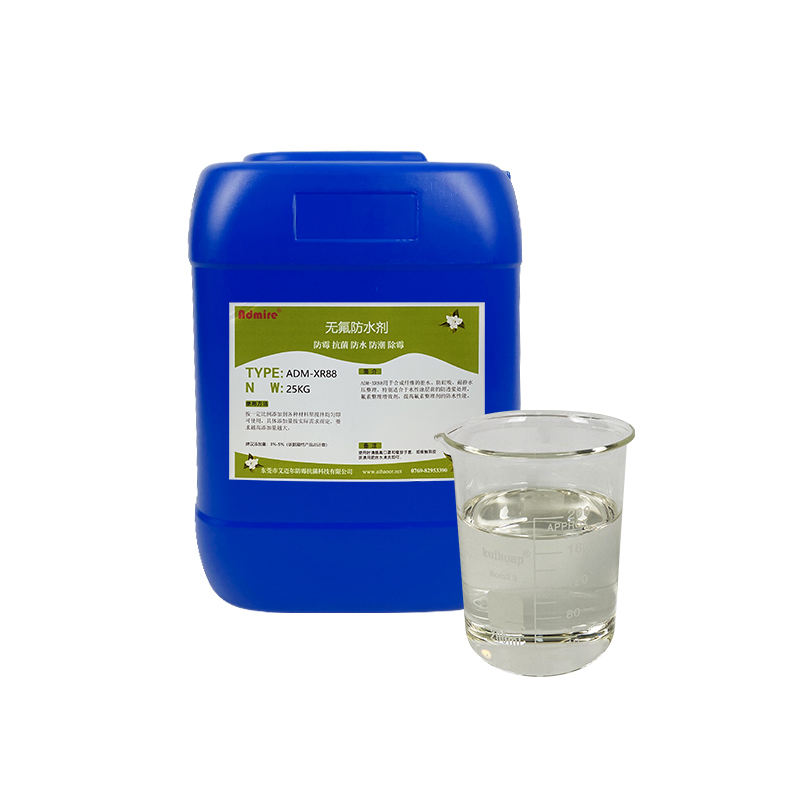
ADM-XR88 Fluorine-Free Water Repellent
ADM-XR88 is an additional option for textile applications where water repellency is required.
Key Features
APEO-free formulation
Provides water repellency for suitable synthetic fibers
Suitable for anti-wicking and hydrostatic pressure finishing
Can be used as an efficiency-enhancing component in selected fluorine-based water-repellent systems
Helps improve initial water repellency and wash durability
Suitable for synthetic and blended fabrics
Typical Applications
Outdoor textiles
Functional fabrics
Tent fabrics
Awnings
Upholstery fabrics
Water-repellent garments
ADM-600 Oil-Based Water Repellent
ADM-600 is an additional option for applications requiring water, oil, and stain resistance.
Key Features
3M solvent-based fluorinated resin
Water, oil, and stain repellency
No heat curing required
Suitable for selected materials that cannot undergo high-temperature drying
Can be highly diluted according to application requirements
Good storage stability
Typical Applications
Textiles
Leather and synthetic leather
Footwear
Accessories
Outdoor products
Materials requiring water, oil, or stain resistance
Formulation and processing conditions should be optimized according to the material, equipment, and required performance.
Which Textile Protection Solution Do You Need?
Application Stage
Main Risk
Core Solution
Simple Selection Guide
Need mold protection during textile production?
→ ADM-BJ01
Need mold and antibacterial protection for finished garments or textiles?
→ ADM-CF
Concerned about moisture during packaging, storage, or ocean shipping?
→ F-3
Need enhanced antibacterial performance?
→ ADM-Ag120
Need fluorine-free water repellency?
→ ADM-XR88
Need water, oil, and stain resistance?
→ ADM-600
Products can be used independently or combined when different risks need to be addressed.
Textile Protection by Application
Garments & Apparel
Garments may be exposed to moisture and microbial risks during production, storage, packaging, and export transportation.
Recommended approach:
Production: ADM-BJ01
Finished garments: ADM-CF
Packaging & shipping: F-3
Home Textiles
Bedding, blankets, curtains, carpets, and upholstery fabrics may require protection against mold and moisture while maintaining appearance, hand feel, and odor requirements.
Recommended approach:
Mold protection: ADM-BJ01 / ADM-CF
Packaging moisture control: F-3
Where water repellency is also required, ADM-XR88 or ADM-600 can be considered based on the application.
Industrial & Technical Textiles
Industrial textiles can have very different performance requirements depending on their final use, including nonwovens, tarpaulins, tent fabrics, and other technical materials.
Recommended approach:
Mold protection: ADM-BJ01 / ADM-CF
Packaging moisture control: F-3
Water repellency: ADM-XR88
Water, oil & stain resistance: ADM-600
How Do We Select the Right Textile Protection Solution?
Textile materials and manufacturing processes vary significantly.
To recommend a suitable product and application method, our technical team may need information about:
Material
Fiber composition
Cotton, polyester, nylon, wool, or blends
Fabric construction
Woven, knitted, or nonwoven structure
Production Process
Dyeing
Printing
Washing
Coating
Finishing
Sewing
Drying and curing conditions
Storage & Packaging
Warehouse temperature and humidity
Moisture content of the textile
Packaging method
Packaging volume
Storage duration
Transportation
Ocean, land, or other transportation
Transportation duration
Shipping route
Container conditions
Expected humidity exposure
Required Performance
Mold protection
Antibacterial protection
Moisture control
Water repellency
Oil repellency
Stain resistance
Odor requirements
Hand feel and appearance requirements
Based on this information, we can recommend a suitable product and application approach.
Why Choose Admire for Textile Protection?
A Focused Textile Protection System
Our core textile protection solutions cover three critical stages:
Production → Finished Products → Packaging & Transportation
This allows customers to address the actual risk instead of applying unnecessary products.
Application-Based Product Selection
We do not select products based only on product names.
Our recommendations consider:
Textile material
Production process
Application environment
Packaging method
Storage duration
Transportation conditions
Required performance
Technical Support from Testing to Application
We can support customers with:
Product selection
Sample testing
Dosage recommendations
Process compatibility evaluation
Packaging moisture-control recommendations
Mold and antibacterial protection solutions
Performance optimization
For different textile materials and production processes, laboratory or small-scale testing is recommended before full-scale production.
Frequently Asked Questions
How can textile manufacturers prevent mold?
Textile mold prevention usually requires a combination of moisture management, suitable storage conditions, and appropriate antimicrobial protection.
During production, a suitable anti-mold or antibacterial treatment can be selected according to the textile material and process. During packaging and transportation, moisture control becomes equally important.
Can anti-mold agents be used on cotton and polyester fabrics?
Some anti-mold products can be used on cotton, polyester, and other textile materials. However, the appropriate product and application process depend on fiber composition, fabric structure, finishing conditions, and required performance.
Compatibility testing is recommended before large-scale production.
How do you prevent mold in fabric rolls?
Fabric rolls should be stored under appropriate temperature and humidity conditions, and materials with excessive moisture should be properly dried before long-term storage.
Depending on the material and storage period, suitable anti-mold treatment and moisture-management measures can also be used to reduce mold risk inside fabric rolls.
Can moisture absorbers replace anti-mold treatment?
Not completely.
Anti-mold and antibacterial products are designed to provide microbial protection on suitable treated materials, while moisture absorbers help control humidity inside enclosed packaging.
For moisture-sensitive textiles, the two approaches can complement each other.
How do you prevent mold on textiles during ocean shipping?
The appropriate solution depends on the moisture content of the cargo, packaging method, transportation duration, container conditions, and expected humidity exposure.
Anti-mold treatment can help protect the textile itself, while moisture-control products such as F-3 can help reduce excess humidity inside enclosed packaging.
For long-distance ocean shipping, combining mold protection with moisture management may provide more comprehensive protection.
What is the best anti-mold treatment for textile products?
There is no single product that is best for every textile.
The appropriate solution depends on the fiber composition, fabric construction, production process, application method, storage conditions, and required performance.
ADM-BJ01 and ADM-CF are designed for different textile mold-protection stages, while F-3 focuses on moisture control in enclosed packaging and transportation.
Can anti-mold treatment affect textile color or hand feel?
Different textile materials, dyes, coatings, and treatment processes may respond differently to antimicrobial products.
Compatibility testing with the actual textile is therefore recommended before production to confirm color, hand feel, appearance, and other required properties.
Can Admire provide a customized textile protection solution?
Yes.
Admire can recommend suitable anti-mold agents, antibacterial agents, moisture-control products, and water-repellent products based on the textile material, production process, packaging method, storage conditions, and transportation environment.
Protect Your Textiles from Production to Delivery
Textile mold prevention is not limited to a single treatment step.
From fabric production and wet processing to storage, garment manufacturing, packaging, and long-distance transportation, different stages can introduce different moisture and microbial risks.
Admire provides application-based textile protection solutions covering:
Anti-Mold & Antibacterial Treatment → Finished Product Protection → Moisture Control
Additional water-repellent solutions are available for textiles requiring specific functional performance.
Tell us about your textile material, production process, packaging method, and transportation conditions, and our technical team can help identify a suitable protection solution.
Get a Textile Protection Recommendation
Looking for a solution for:
Textile mold prevention
Anti-mold treatment for fabrics
Textile antibacterial treatment
Mold prevention during storage
Mold prevention during ocean shipping
Textile moisture control
Water-repellent treatment
Contact Admire for product selection, sample testing, and technical support.
Related Industry Solutions
Leather Industry Mold & Protection Solutions
Solutions for mold protection, moisture control, and water-repellent treatment of leather, footwear, bags, furniture, and automotive applications.
Ocean Shipping Mold & Moisture Protection
Learn how moisture, condensation, and container rain can contribute to mold damage during ocean transportation and how appropriate moisture-control measures can help reduce these risks.
Can't find what you're looking for ?
Leave a Message we will call you back quickly!
Professional Service
Interested? Leave your contact details.
Search Starts Here
