


News
Does Waterproofing Prevent Mold?
Many manufacturers ask, “We already used a waterproofing agent. Why does mold still appear?”
This is a common concern when materials are exposed to humid environments, condensation, or prolonged moisture.
The reason is simple: waterproofing and mold protection address different problems.
Waterproofing helps reduce water penetration or improve water repellency, while anti-mold protection focuses on microbial growth. Depending on the material, environment, and application requirements, both functions may need to be considered as part of an overall material protection strategy.
Does Waterproofing Prevent Mold?
Not necessarily.
Waterproofing products are primarily designed to improve water resistance, reduce water penetration, or provide water-repellent properties.
However, mold growth depends on more than direct water exposure. Relative humidity, condensation, temperature, surface contamination, trapped moisture, and ventilation can all influence mold development.
Therefore, a material can have good water resistance and still develop mold when environmental conditions are favorable for microbial growth.
Why Can Mold Still Grow After Waterproofing?
1. High Humidity Can Remain
Waterproofing can reduce water penetration, but it cannot remove moisture from the surrounding environment.
In humid climates, materials may continue to be exposed to high relative humidity. Over time, moisture can accumulate on or within certain materials, creating conditions that may support mold growth.
2. Condensation Can Create Surface Moisture
Temperature fluctuations can cause condensation on material surfaces.
This can occur in warehouses, shipping containers, enclosed spaces, and other environments where warm, humid air comes into contact with cooler surfaces.
Waterproofing may improve water resistance, but it does not necessarily prevent condensation from occurring.
3. Moisture Can Become Trapped
Some materials have porous or fibrous structures that can retain moisture.
Wood, leather, textiles, and other materials may hold moisture even after a water-repellent treatment has been applied.
If moisture remains trapped for an extended period, the risk of mold growth can increase.
4. Surface Contamination Can Support Mold Growth
Mold does not require standing water to develop.
Dust, organic residues, processing residues, and other contaminants on a material surface can provide nutrients for microorganisms.
When humidity and temperature are also favorable, mold may develop even when the material has been treated for water resistance.
5. Waterproofing Does Not Automatically Provide Antimicrobial Protection
This is one of the most important differences between waterproofing and anti-mold protection.
A waterproofing agent is generally intended to improve water resistance. Unless antimicrobial functionality is specifically incorporated into the formulation, waterproofing should not automatically be considered a mold-control treatment.
When mold growth is also a concern, an appropriate anti-mold or antimicrobial treatment may need to be evaluated separately.
Waterproofing vs. Anti-Mold Protection
Waterproofing and anti-mold protection serve different purposes.
In other words:
Waterproofing does not automatically replace anti-mold protection, and anti-mold protection does not replace waterproofing.
For some applications, the two functions can be considered as complementary parts of a broader material protection strategy.
Waterproofing Solutions for Different Applications
The right waterproofing product depends on the material, application method, desired performance, and processing conditions.
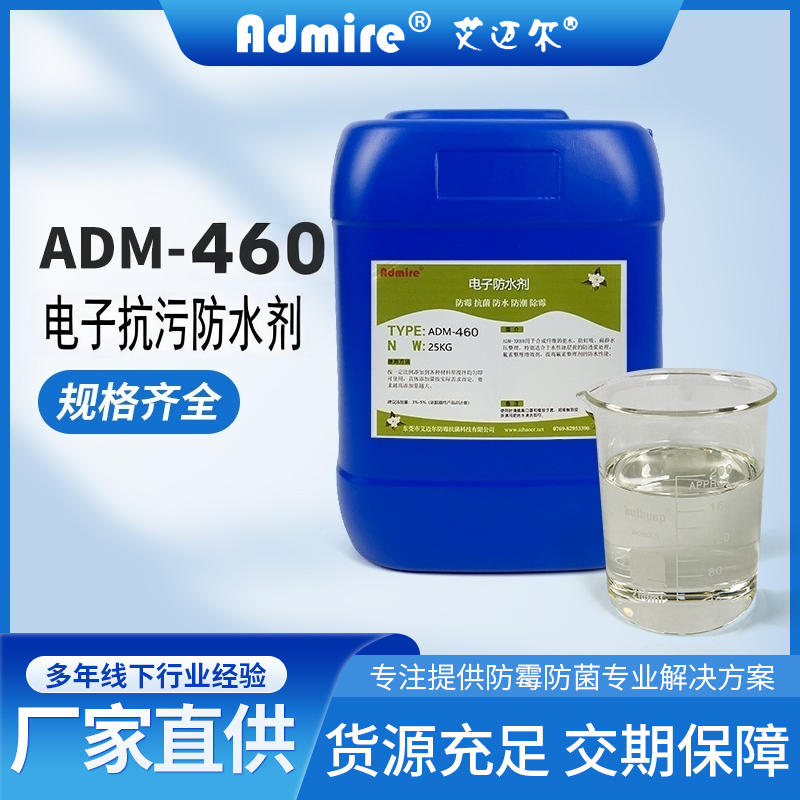
ADM-460 Anti-Stain Water Repellent Agent
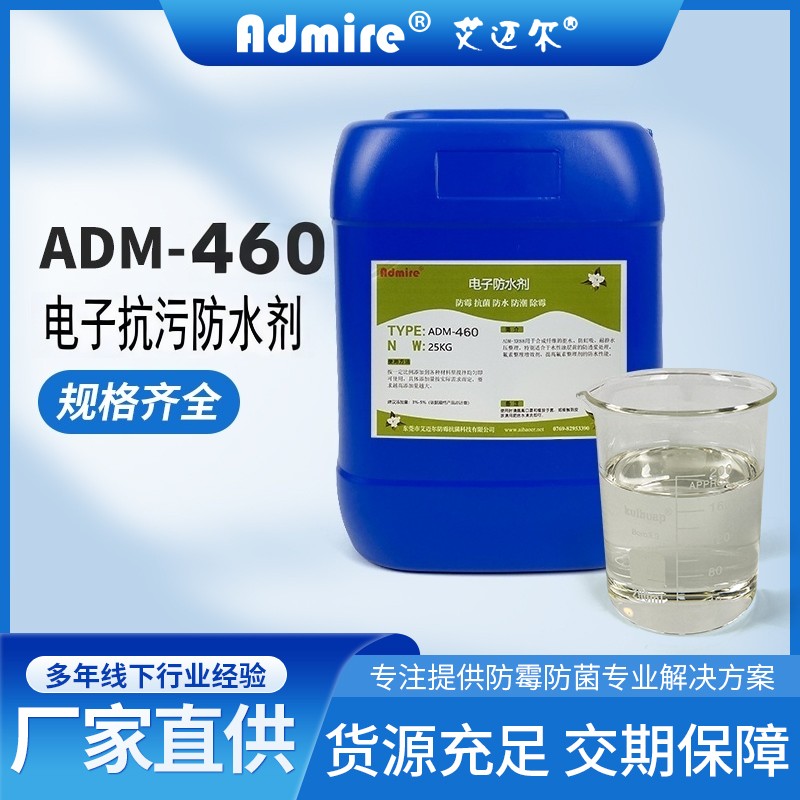
ADM-460 is an anti-stain and water-repellent treatment designed to provide water, oil, moisture, and stain resistance for a range of materials and surfaces.
It can be considered for applications involving materials such as fabrics, wood, stone, and other industrial surfaces.
[View ADM-460 Anti-Stain Water Repellent Agent →]
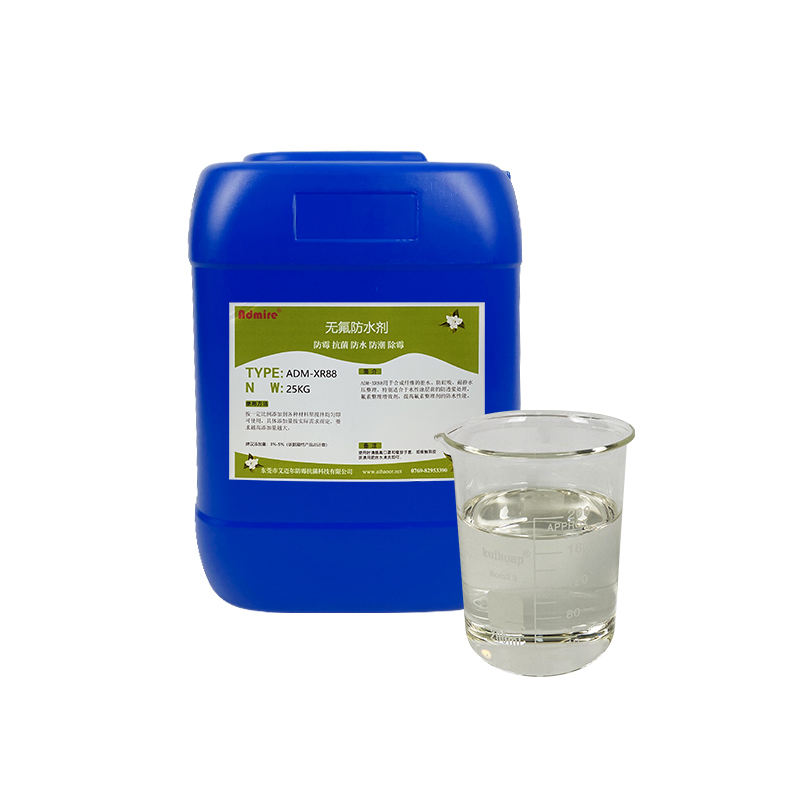
ADM-XR88 Fluorine-Free Waterproofing Agent
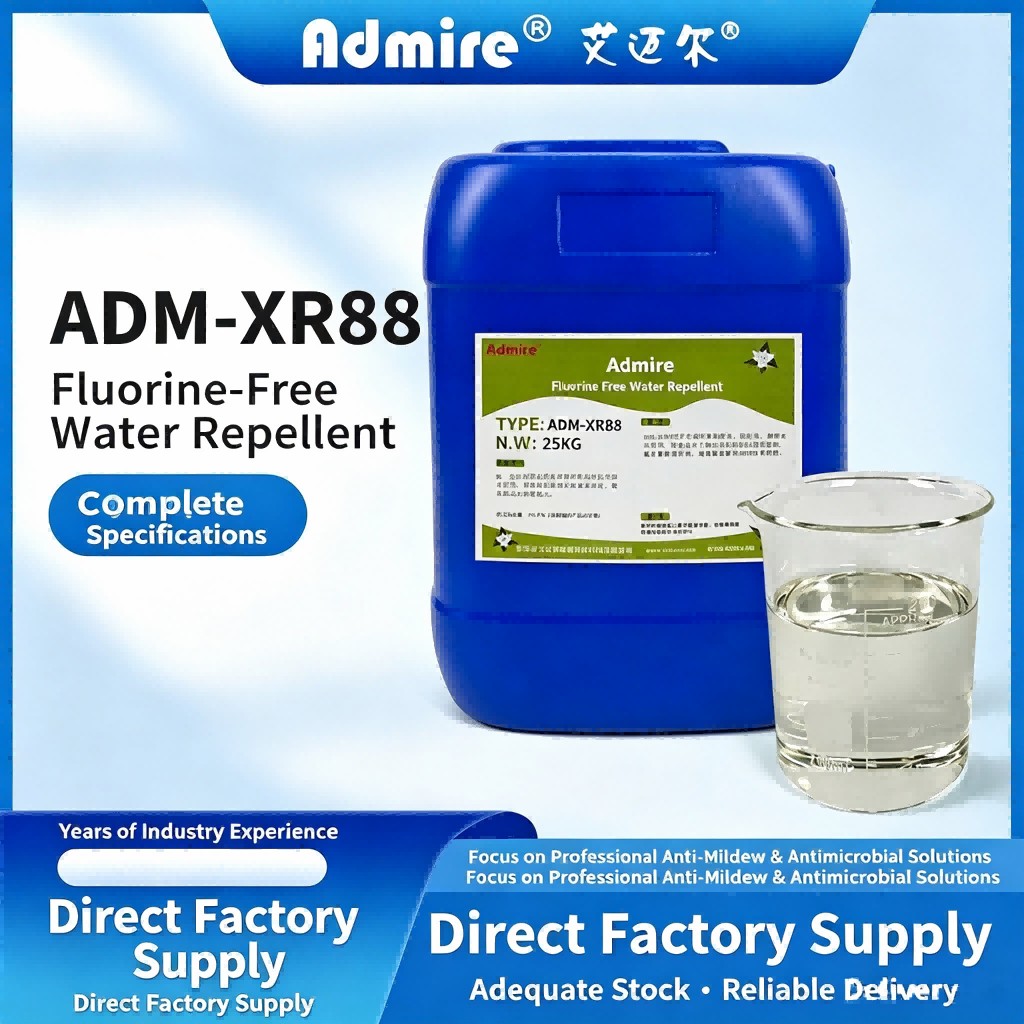
ADM-XR88 is a fluorine-free waterproofing agent designed particularly for synthetic fiber water-repellent finishing and anti-penetration applications.
It can also be evaluated for water-based coating applications where improved water resistance is required.
[View ADM-XR88 Fluorine-Free Waterproofing Agent →]
ADM-600 Oil-Based Waterproofing Agent
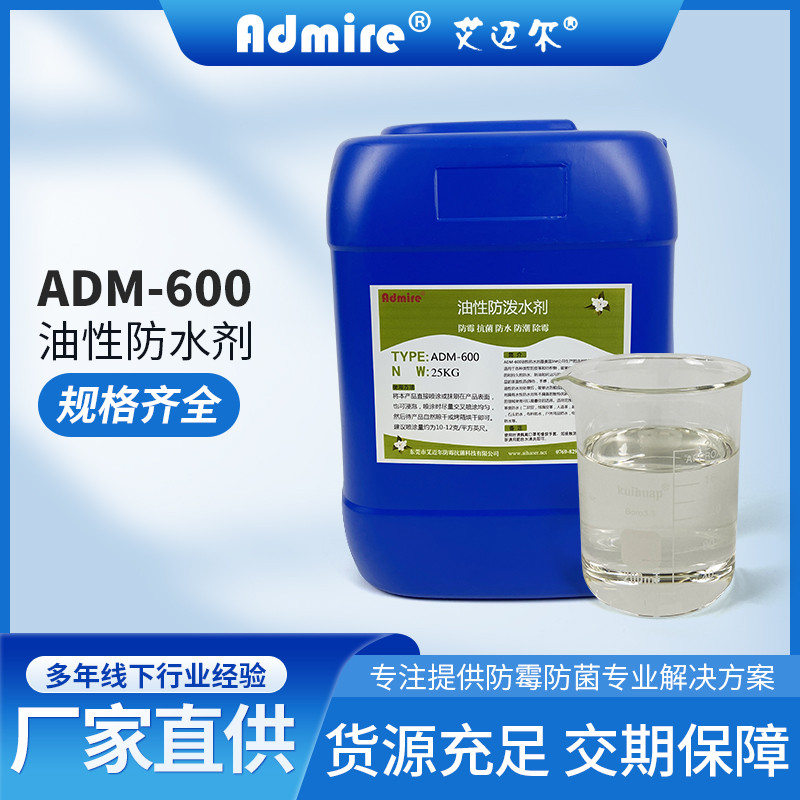
ADM-600 is an oil-based waterproofing agent designed for applications including leather, textiles, building materials, paper products, stone, and outdoor products.
Its application can be considered where water, oil, and stain resistance are important requirements.
[View ADM-600 Oil-Based Waterproofing Agent →]
When Is Waterproofing Not Enough?
Waterproofing can help reduce water exposure, but materials may still face high humidity, condensation, trapped moisture, or microbial contamination.
If mold growth is also a concern, an anti-mold or antimicrobial treatment may need to be evaluated as part of the overall material protection strategy.
For example, materials used in humid environments may require both:
Water Resistance + Mold Protection
The appropriate combination depends on the substrate, formulation, application method, processing conditions, and required performance.
[Explore Anti-Mold & Antimicrobial Solutions →]
Can Waterproofing and Anti-Mold Protection Work Together?
In some applications, waterproofing and anti-mold protection can be evaluated as complementary treatments.
The goal is not necessarily to make one product perform every function. Instead, each treatment can address a different material protection requirement.
For example:
Waterproofing → Helps manage water exposure
Anti-Mold Protection → Helps address mold growth
Before combining products, compatibility should be evaluated according to the substrate, formulation, processing conditions, application method, and required performance.
Laboratory or application testing is recommended before large-scale production.
How to Choose the Right Protection System
The appropriate product depends on your material and the problem you need to solve.
There is no single waterproofing or anti-mold product that is suitable for every material and application.
Factors such as substrate, processing temperature, application method, formulation compatibility, dosage requirements, storage conditions, and target performance should be considered when selecting a treatment.
Frequently Asked Questions
Does waterproofing prevent mold?
Not necessarily. Waterproofing can reduce water penetration and improve water resistance, but mold growth is also affected by humidity, condensation, temperature, surface contamination, and other environmental conditions.
Can mold grow after waterproofing?
Yes. Mold can still develop when sufficient moisture and other favorable growth conditions remain after waterproofing treatment.
Can I use an anti-mold agent with a waterproofing system?
In some applications, an anti-mold agent can be evaluated together with a waterproofing system. Compatibility should be confirmed through formulation and application testing.
Can I add an anti-mold agent directly to a waterproofing formulation?
It depends on the specific products and formulation. Compatibility, stability, processing conditions, and the intended application should be evaluated before combining them.
What is the difference between waterproofing and anti-mold protection?
Waterproofing focuses on water resistance and water penetration, while anti-mold protection focuses on microbial growth. They address different aspects of material protection.
How do I choose the right waterproofing agent?
Consider the substrate, application method, required water resistance, processing conditions, environmental requirements, and other performance requirements. A product should be selected based on the specific application rather than a single universal standard.
Need Waterproofing and Mold Protection for Your Material?
Tell us your material, application method, and protection requirements. Our technical team can recommend suitable waterproofing or anti-mold products for evaluation and provide the relevant technical documentation.
[View Waterproofing Products →]
[Explore Anti-Mold & Antimicrobial Solutions →]
Can't find what you're looking for ?
Leave a Message we will call you back quickly!
Professional Service
Interested? Leave your contact details.
Search Starts Here
